
Waste
Introduction
Waste is one of the most visible environmental impacts of football, from food and drink packaging on matchdays to old kit, equipment and temporary event materials. Much of this waste can be reduced, reused or recycled with simple changes to how Clubs plan, purchase and operate.
Football has traditionally followed a linear approach to waste, taking resources, using them once and throwing them away. Currently, only a small proportion of materials used in football are reused or recycled. The FAW Together Greener Programme supports Clubs to move towards a more sustainable circular approach.
This approach is known as the circular economy and is based on the 4R model:
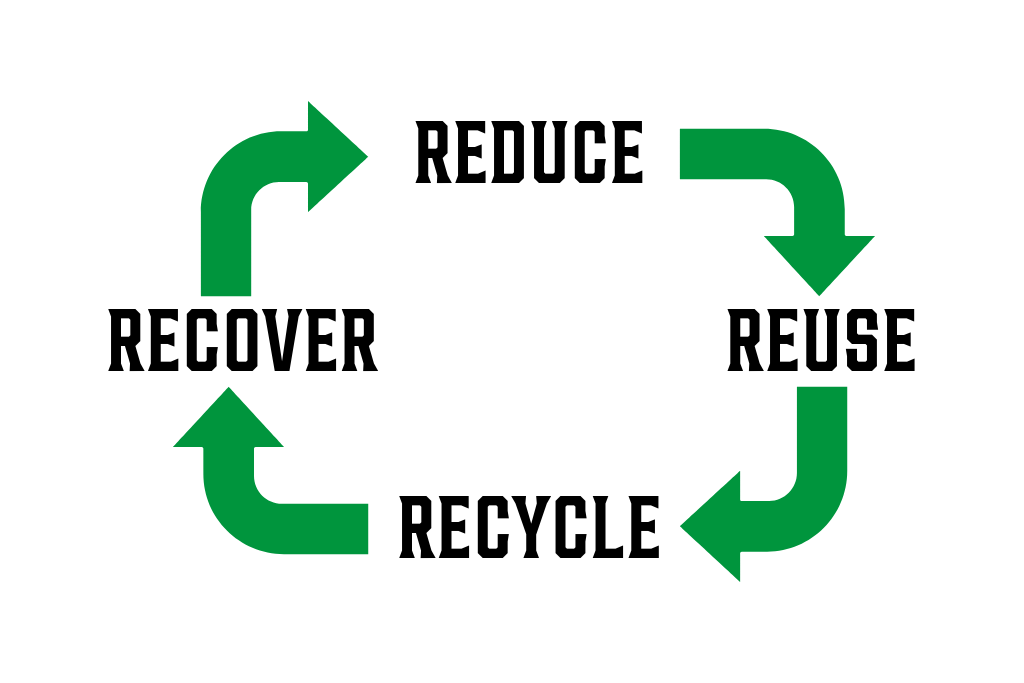
By applying these principles, Clubs can cut waste, reduce costs, improve matchday experiences and protect local environments. Waste actions are relevant for all Clubs, whether you manage your own facilities or use shared venues.
Use the steps below to explore this topic in more detail and support your Club to turn ideas into action. Click into each step and work through them in order, using the guidance and resources provided to support your Club. You do not need to complete everything at once; take action at a pace that works for your Club and return to the steps as your Together Greener journey develops.

Use the steps below to explore this topic in more detail and support your Club to turn ideas into action. Click into each step and work through them in order, using the guidance and resources provided to support your Club. You do not need to complete everything at once; take action at a pace that works for your Club and return to the steps as your Together Greener journey develops.
Assess
Understanding the types and amounts of waste your Club produces is the first step towards reducing it.
The ‘ASSESS’ step helps Clubs identify where waste is generated, how it is currently managed and where improvements can be made. This may include matchdays, training sessions, facility activities and events.
Assessment does not need to be complex. Simple questionnaires, walk-around audits and observations can provide valuable insight, even where Clubs do not control waste contracts directly.
Resources in this section will help Clubs:
- Highlight opportunities to reduce waste at source.
- Identify main waste streams, including general waste, recycling and food waste.
- Understand current waste segregation and bin placement.
- Identify single-use items commonly used at the Club.
Identify
Once waste streams are understood, Clubs can identify actions that will have the greatest impact.
This step encourages Clubs to think about waste across different areas of Club activity and apply the 4R principles when choosing actions.
Clubs may identify actions such as:
- Improving recycling options in shared or local authority facilities.
- Improving waste segregation and signage.
- Reducing or eliminating single-use plastic bottles and cups.
- Introducing reusable or refillable alternatives.
- Running kit, boot or equipment swap schemes.
- Sustainable purchasing and procurement.
- Reducing food waste and improving catering practices.
- Reusing or repurposing advertising boards, signage and event materials.
- Working with suppliers to reduce packaging.
Act
The ‘ACT’ stage focuses on putting waste reduction plans into practice.
Clubs can select a small number of priority actions that align with their facilities, events and resources. Some actions may be quick wins, while others may require planning or coordination with suppliers or venue owners.
This section supports Clubs to:
- Develop a simple waste action plan.
- Assign responsibilities within the Together Greener Team.
- Introduce new practices gradually.
- Track progress and challenges.
Clubs are encouraged to focus on reducing waste first, then reusing and recycling where possible, and recovering value from remaining waste streams.
Communicate
Clear communication is key to changing behaviours around waste.
Players, volunteers and supporters need clear guidance on what to do with waste, particularly on busy matchdays. Positive messaging helps reinforce new habits and reduces contamination in recycling streams.
This section provides guidance and resources to help Clubs:
- Communicate waste changes clearly and consistently.
- Use signage and prompts to support correct waste disposal.
- Promote reuse initiatives such as refillable bottles or gear swaps.
- Celebrate progress and successes.
Effective communication helps embed circular thinking into everyday Club culture.
Review
Reviewing waste actions helps clubs understand what has worked and where further improvements are needed.
This step focuses on monitoring waste reduction, recycling performance and behaviour change. Reviewing can be simple and based on observation, feedback and available data.
Clubs are encouraged to:
- Review waste actions and outcomes.
- Reflect on reductions in waste and improvements in segregation.
- Capture learning to inform future actions.
- Update Together Greener Goals as the Club progresses.
Regular review supports continuous improvement and helps Clubs move further along the circular economy journey.
Case Study
Caernarfon Town FC
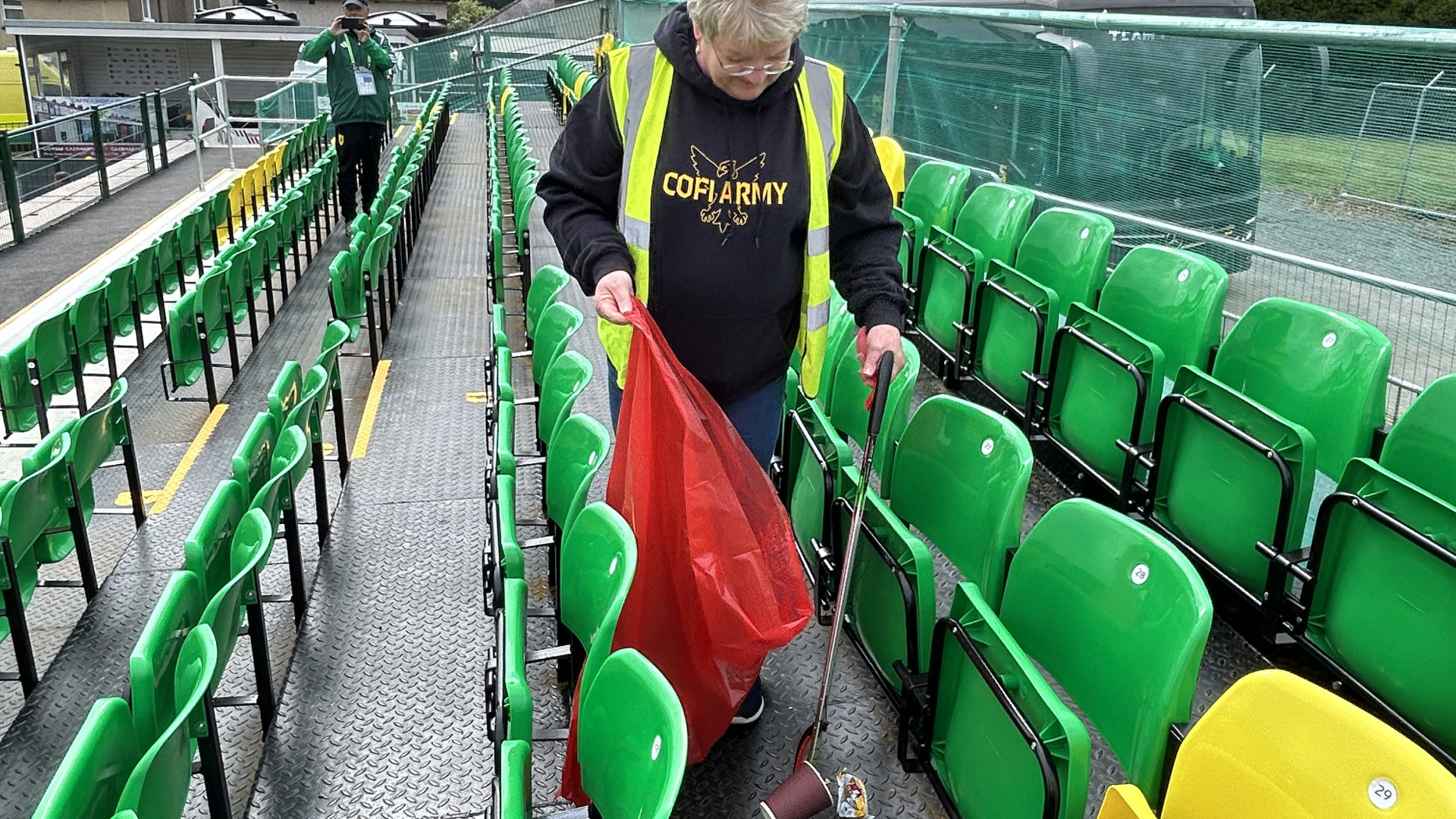
Caernarfon Town FC turning matchday pride into a cleaner local community
Caernarfon Town FC has taken the spirit of Together Greener beyond the match itself by organising community litter picks following their matches. Using the FAW Together Greener Litter Picking Hub, the Club has been able to bring players, volunteers and members of the wider Club community together to take practical action to improve the area around the Club.
The litter picking hub was provided as part of the sustainability legacy of the UEFA European Under-19 Championship 2026, helping to ensure that the tournament’s sustainability ambitions created a lasting benefit beyond the competition itself. The equipment provides Clubs with a practical resource that can be used to support ongoing environmental activity within their communities.
For Caernarfon Town FC, the activity demonstrates how a simple action can bring people together, improve the local environment and encourage greater awareness of sustainability. By linking litter picking with matchdays, the Club is helping to make environmental action part of its wider Club culture and showing how football can make a positive contribution both on and off the pitch.
If your Club is interested in conducting a community litter pick, there are more than 200 Litter Picking Hubs open across Wales. They offer all the equipment you need to carry out a safe clean-up to keep your local area loved and cared for.
The kit includes litter pickers, hi-vis vests, rubbish bags, and hoops – essential for keeping your bags open in breezy conditions.
Just head to one of our Caru Cymru Litter Picking Hubs and borrow the kit for free! Find out more HERE.
Funding & support
This section includes a variety of funding opportunities that could support your Together Greener actions. These opportunities may help Clubs plan improvements, invest in facilities or take forward sustainability projects over time. Availability and eligibility will vary, so Clubs are encouraged to review options carefully and consider how funding could support their Green Goals.
Cymru Football Foundation
Sport Wales
Welsh Sports Association – WSA
Further resources
The resources below provide additional guidance, tools and inspiration to support your Club beyond the Together Greener Programme. These external resources can help deepen understanding, offer practical ideas and support Clubs to continue learning and improving at their own pace.